Create your own wedding ceremony: where to start

If you want to create your own wedding ceremony, it can be surprisingly difficult to know where to begin. Instead of starting with readings, rituals or a list of wedding ceremony ideas, start by paying attention to your relationship: the people, stories, memories and details that already mean something to you.
You want a wedding ceremony that feels like you. Now what?
“We just want it to feel like us.”
I hear this from couples all the time. You know you want a personal wedding ceremony, and you probably know when an idea doesn’t feel right, but trying to work out what actually belongs in those twenty or thirty minutes can leave you staring at a very blank page.
So you start looking for inspiration. You save a reading. Someone sends you a handfasting they saw on Instagram. You Google wedding ceremony ideas and discover approximately nine thousand possible rituals.
And somehow, having more ideas hasn’t made it any easier to create your own wedding ceremony.
So I want to suggest a different place to start.
For the next ten minutes, forget about the ceremony altogether.
Start with the two of you.
1. Forget the ceremony for a minute
Before you decide what should happen in your wedding ceremony, spend a little time paying attention to the relationship you’re trying to celebrate.
Go for a walk together. Have dinner. Sit in the pub for an hour. You don’t need notebooks, worksheets or a beautifully organised wedding planning session. In fact, I’d leave the wedding out of the conversation altogether for a while.
Take turns answering these questions:
What does a really good day in our life together look like?
What tiny parts of our life would I miss if they disappeared tomorrow?
When do I feel particularly loved by you?
What have we created together that didn’t exist before we met?
What do you think is completely normal about us that somebody else might find funny, lovely or strange?
Don’t try to turn your answers into ceremony ideas yet. Follow the tangents. Tell the stories you’ve both heard a hundred times. Laugh about the ridiculous bits. Ask each other, “Why did you choose that?”
You’re beginning to notice what I sometimes think of as the colour of your days.
And that gives you a much richer place to begin than a list of wedding ceremony traditions.

2. Find your relationship lore
Every relationship develops its own lore.
There are stories you’ve told so many times that one of you only has to say, “Remember when…” and the other already knows where you’re going. There are phrases nobody else would understand, songs that immediately transport you somewhere, objects with completely disproportionate sentimental value and stories your friends have heard approximately seventeen times.
This time, open a note-taking or voice-recording app on your phone and set a timer for ten minutes.
Together, make the longest list you can of:
stories you tell again and again
places that have become important to you
songs, films, books or TV shows that belong to particular chapters of your relationship
objects you’ve kept for reasons nobody else would understand
phrases, nicknames and running jokes
moments that changed the direction of your relationship
tiny memories that still make one of you laugh
Don’t decide whether any of it is “meaningful enough” for a wedding ceremony. Write down The Burnt Lasagne Incident, the stupid nickname and the song you played 400 times on your first holiday alongside the proposal, the house you bought and the year that changed everything.
Then look at your list and each choose three entries you’d hate to lose from the story of you.
Ask each other one question: Why that one?
That’s where this exercise gets interesting.
The silly story might actually be about the first time you realised you could completely relax around each other. The song might take you back to a period when you were falling in love. The battered object you’ve kept for twelve years might represent an entire chapter of your life together.
Those meanings are useful when you create your own wedding ceremony, because they give you material that already belongs to you. Later, we can work out what form it might take.

What can you actually do with all of this?
I worked with a couple recently who discovered that music held a huge amount of their relationship history.
When they first met, he made her a mixtape, and one particular song from it had stayed significant to them. As we talked, we found two more songs connected to different chapters of their relationship.
So we built their storytelling moment around those three songs.
During the ceremony, they sat with their guests and told the story themselves, moving through those three chapters of their relationship with the music woven through it.
They didn’t begin by deciding they needed a creative way to tell their story. We began with what already mattered to them and designed from there.
That’s what you’re looking for in your own list.
You don’t need to know what any of it will become yet. A song could become part of your storytelling. An object might inspire a ritual. A running joke could find its way into your vows. A place might influence where you stand or what surrounds you.
For now, you’re simply collecting the raw material.
3. Who belongs in this story?
Your relationship has grown inside a much bigger web of people.
Some have known you since childhood. Some watched this relationship begin. Some arrived halfway through and became essential. There may be people who taught you what love looked like, people who supported your relationship at a crucial moment, children who are part of the family you’ve created, and people you love who won’t be there on the day.
Take a piece of paper and write both of your names in the middle.
Around them, write the names of the people who have played a meaningful part in getting you to this point. Don’t think about wedding roles yet. Nobody needs to become a reader, ring bearer or witness simply because their name is on the page.
When you’re finished, look at the names together and ask: What has this person given us?
That might be encouragement, an example of a long marriage, a home you were always welcome in, terrible advice you still laugh about, practical support during a difficult period, friendship, family, or a front-row seat to your relationship from its earliest days.
Then ask: Would it matter to us if that contribution was recognised in our wedding ceremony?
You may discover that there are people you want to hear from. Someone you want beside you for a particular moment. Someone whose story you want to tell. Someone you want to thank. Someone you want your guests to remember with you.
You’re working out who belongs in the story you’re gathering to tell.
(This might be a good time to mention a blog post I wrote called: How to Include Parents in Your Wedding Ceremony)

4. What do you want your guests to understand?
You’ve talked about the life you share, collected some of your relationship lore and thought about the people who have helped shape you.
Now I want you to imagine the end of your wedding ceremony.
You’ve said whatever you’re going to say. Your guests have heard whatever you’ve chosen to share. You’re married, everyone is cheering and you’re about to walk back down the aisle together.
Imagine I stop one of your guests on their way out and ask them: “What do you understand about those two now?”
What would you love them to say?
Go back to your walk, your dinner table or wherever the two of you have your best conversations and finish this sentence separately: When our ceremony is over, I want the people we love to understand that our relationship is…
You’re allowed more than one answer. In fact, keep going for a while.
Maybe you want them to understand how much you make each other laugh, recognise the family you’ve built together or know what their support through a difficult chapter has meant to you.
Then compare your answers.
Where do they overlap? What surprises you? What has one of you noticed about your relationship that the other hadn’t thought to name?
And finally, choose one or two ideas that you would really like your guests to leave carrying with them.
Later, use those ideas as a test: does each choice help your guests understand what you want them to understand?

5. Turn what you’ve found into your wedding ceremony
Now you can start thinking about the ceremony.
Go back through everything you’ve gathered so far: the details of your life together, your relationship lore, the people who matter and the one or two ideas you want your guests to leave understanding about you.
Pick out anything that still has energy around it. The story you kept talking about after the exercise was finished. The person whose name immediately made you both smile. The answer one of you gave that surprised the other.
Then take each one and ask: How could this show up in our wedding ceremony?
Write down every answer that occurs to you, even if you have no idea whether it would work.
If music tells a big part of your story, perhaps you do more with it than choose songs for walking down the aisle.
If your families have been instrumental in your relationship, perhaps there is a moment when you acknowledge what they have given you or invite them to contribute.
If your friends have watched your relationship develop, perhaps you ask one of them to tell a story you could never tell in quite the same way yourselves.
If you discovered that food, travel, books, Sunday mornings, your children or the community around you are woven through your relationship, ask what that could inspire.
Keep following the answers. You’re looking for ideas that make you think, “Oh God, that is so us.”
Give yourselves twenty minutes and see how many possibilities you can generate. Don’t worry about the order, the timings or whether you can fit everything in. You’ll deal with that next.
For now, play.
You’ve stopped asking, “What are we supposed to have in a wedding ceremony?”
You’re beginning to ask a much more useful question: “What could our wedding ceremony become?”

6. Build your first version
Now get everything out of your heads and into the room.
Write each idea you’ve gathered on a separate sticky note or scrap of paper. Include only the things you’ve actually chosen: stories, people, sounds, words, rituals, moments of involvement or anything else you’re excited about.
Stick them all over the kitchen wall. Spread them across the living room floor. Give yourselves enough space to move them around.
Then start building.
What feels like it should happen first, and what wants to come next?
Where do you want to hear from somebody else, if you do?
If you’ve chosen music, where does it belong?
When, if at all, do you want to speak?
If you’re making vows or exchanging rings, where do those moments fit?
What else have you chosen that needs space around it?
Move the pieces around. Stand back and look at them. Swap two over. Take one out. Put it back in. Try a completely different order and see what happens.
You’re not writing your ceremony yet. You’re making a map of it.
And while you’re moving the pieces around, keep returning to the question you answered earlier: What do we want our guests to understand about us by the time this is over?
Notice whether the ceremony you’re building helps you get there.
You might also find that one idea is doing a lot of work while another suddenly feels unnecessary. Two separate ideas might belong together. There might be a section that feels crowded or a point where you realise you want everyone in the room to participate.
Keep moving the pieces until you can stand back, look at your kitchen wall or living room floor and think: Yes. I can see our wedding ceremony now.
Take a photo before the dog walks through it!
That’s your first draft.
It can change completely from here. In fact, I’d expect it to. Good ceremony design involves trying ideas, talking about them, moving them around and discovering what becomes possible as you go.
For now, though, you’ve done the hardest part.
You’ve started with your relationship and built outwards from there.
Once you can see the shape of your ceremony, my step-by-step guide to creating your DIY wedding ceremony will help you turn that first map into a complete plan.
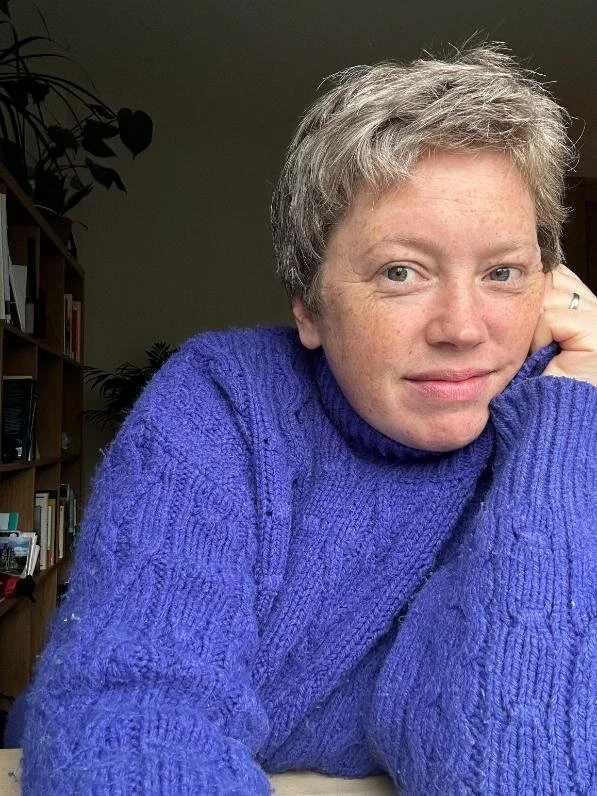
Hello! I’m Sinéad, an independent celebrant based in the UK.
I’m a big believer that your wedding ceremony should the final highlight of an extraordinary journey. A once-in-a-lifetime opportunity to notice, celebrate and share the significance of your relationship with the people you love. I love hearing people’s stories, celebrating love in all its forms and helping couples create a day that feels relaxed, joyful and completely their own.
Come and discover more about my ceremonies here, or pop over and say hello on Instagram here.
Some questions you might have…
-
Yes, although the legal position depends on where in the UK you are getting married.
In England and Wales, an independent celebrant-led wedding ceremony is not currently the part that makes you legally married. Many couples complete the legal marriage separately through a register office or another legally recognised ceremony, then have a celebrant-led wedding ceremony where they have much more freedom to decide what happens and what it means to them.
If you want your wedding ceremony itself to be the legal marriage, there are specific requirements around where and how it takes place, so check the current rules for your circumstances before making plans.
Their answers will give you a much better starting point for finding a role that feels meaningful and comfortable for everyone.
-
Start with what you want the ceremony to mean, rather than trying to assemble a checklist of traditional elements.
Your ceremony might include stories, music, vows, readings, contributions from people you love, an exchange of rings or a ritual you create yourselves. Use the exercises above to work out what matters to you first, then decide how those ideas could take shape in the ceremony.
There is no prize for squeezing in every wedding tradition you’ve ever seen.
-
There is no perfect length for a personal wedding ceremony. Around 20 to 30 minutes can give you plenty of time to create a ceremony with depth, involvement and personality, although yours might be shorter or longer depending on what you include.
Rather than aiming for a particular number of minutes, look at what each part is contributing. If a story, reading or ritual earns its place, give it the time it needs.
-
Absolutely. And they can do far more than give a reading.
Someone could tell a story, introduce a piece of music, offer some advice, take part in a ritual, conduct your ring exchange or contribute in a way you invent yourselves.
Go back to the exercise in Step 3 and think about the person before you think about the role. What would they genuinely enjoy doing? What are they brilliant at? How do they naturally show their love for you?
That’s usually a much better starting point than deciding you need “a reading” and then trying to find someone to do it.
You don’t have to figure out the rest alone
If you’ve made it this far, you already have far more than a collection of wedding ceremony ideas.
You have the beginnings of a ceremony that comes from your actual relationship: how you live together, the stories you’ve accumulated, the people who helped shape you and what you want everyone you love to understand about the two of you.
And you may now have a kitchen wall covered in sticky notes.
This is the point where another pair of eyes can be really useful.
Shape Your Ceremony is a 90-minute session with me where we take everything you already know, everything you’re still unsure about and all the ideas currently competing for space in your head, and work out how to turn them into a wedding ceremony that works.
Before we meet, I’ll send you some questions and my Worth The Asking cards to help you dig a little deeper. Then we’ll spend 90 minutes together looking at your structure, developing the ideas that have real potential, working through the parts you’re stuck on and finding ways to involve the people you love that actually suit them.
You’ll leave with a clear shape for your ceremony and a much better sense of what happens next. You’ll also get access to my course called, The Vows to help you polish up the dreamiest personal vows imaginable!
So if there are currently sticky notes all over your kitchen wall and you’d quite like someone to help you make sense of them, get in touch.
Wedding ceremony services for couples
I offer two ways to work with me, depending on whether you would like me to create and lead your ceremony or help you create it yourselves.