How to Choose a Celebrant for Your Wedding
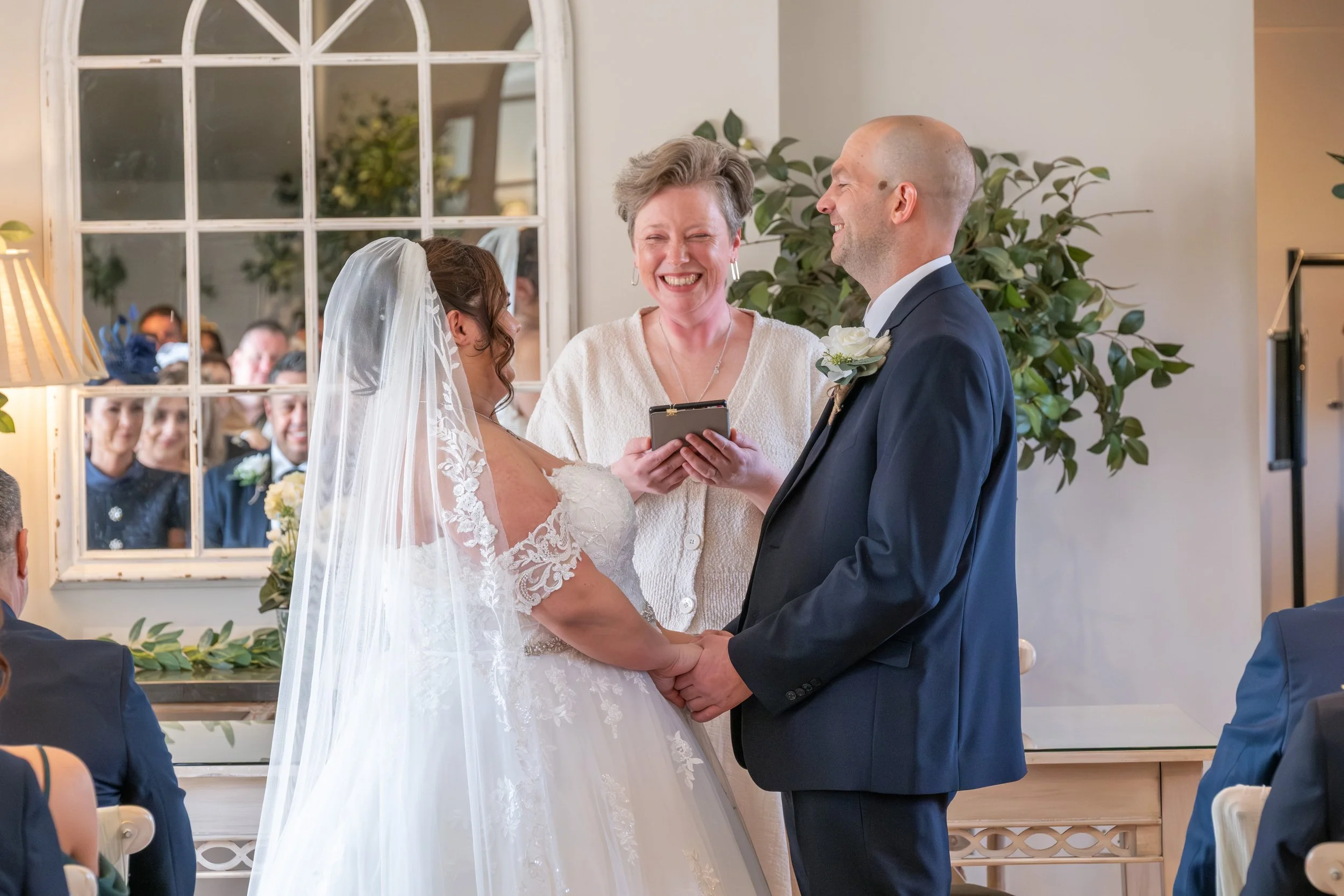
Choosing a celebrant for your wedding is about finding someone you trust to help you create one of the most meaningful parts of your day. Every celebrant works differently and, perhaps more importantly, we all have our own ideas about what a wedding ceremony can be, so finding someone whose approach feels right for you can make an enormous difference to both the planning and the ceremony itself.
Here are eight things I think are worth considering when you're choosing yours.
1. Pay attention to what they believe a ceremony is for
If you're wondering how to choose a celebrant, this is where I'd start. Spend some time reading their website, their social media, their blogs and anything else they've written, and get curious about how they talk about ceremonies.
You'll often hear celebrants describe our job as “telling your love story”, and storytelling can be a gorgeous part of a ceremony. I also happen to think your relationship is much bigger than the story of how you met and got engaged, and if that's all you're being offered, well… someone is shortchanging you!
Your ceremony might explore the community that has grown around your relationship, the family you've created, the people who have shaped you, the promises you want to make, the life you've built together, or what choosing one another means at this particular point in your lives. Your love story might be woven through all of that, and the ceremony itself might end up somewhere you hadn't imagined at all.
I think it's worth finding a celebrant who is curious about all of this, particularly if you don't yet know what you want your ceremony to be.
2. Find out how they get to know you
Every celebrant has their own process, and I'd want to understand what that process is going to feel like before booking.
Personally, collaboration is a huge part of how I work. I love the conversations where we wander somewhere unexpected, somebody remembers an apparently insignificant detail and we realise it matters enormously, or an idea we thought would work gets completely overhauled because we've found something that feels much more like the couple.
I recently worked with a couple whose storytelling moment eventually grew around three pieces of music that represented different chapters of their relationship. One was from a mixtape he'd made for her when they first met, and once we'd found that thread, we created something where they could sit among their guests and tell parts of their own story with the music woven through it.
We didn't begin with that idea. We found it together, and I think that's part of the joy of creating a ceremony.
So ask the celebrant you're considering how they work, how much you'll be involved and what happens when you change your mind. I think there's huge value in a process that gives ideas enough room to develop, change and occasionally be thrown out altogether.
3. Ask how they approach all that freedom
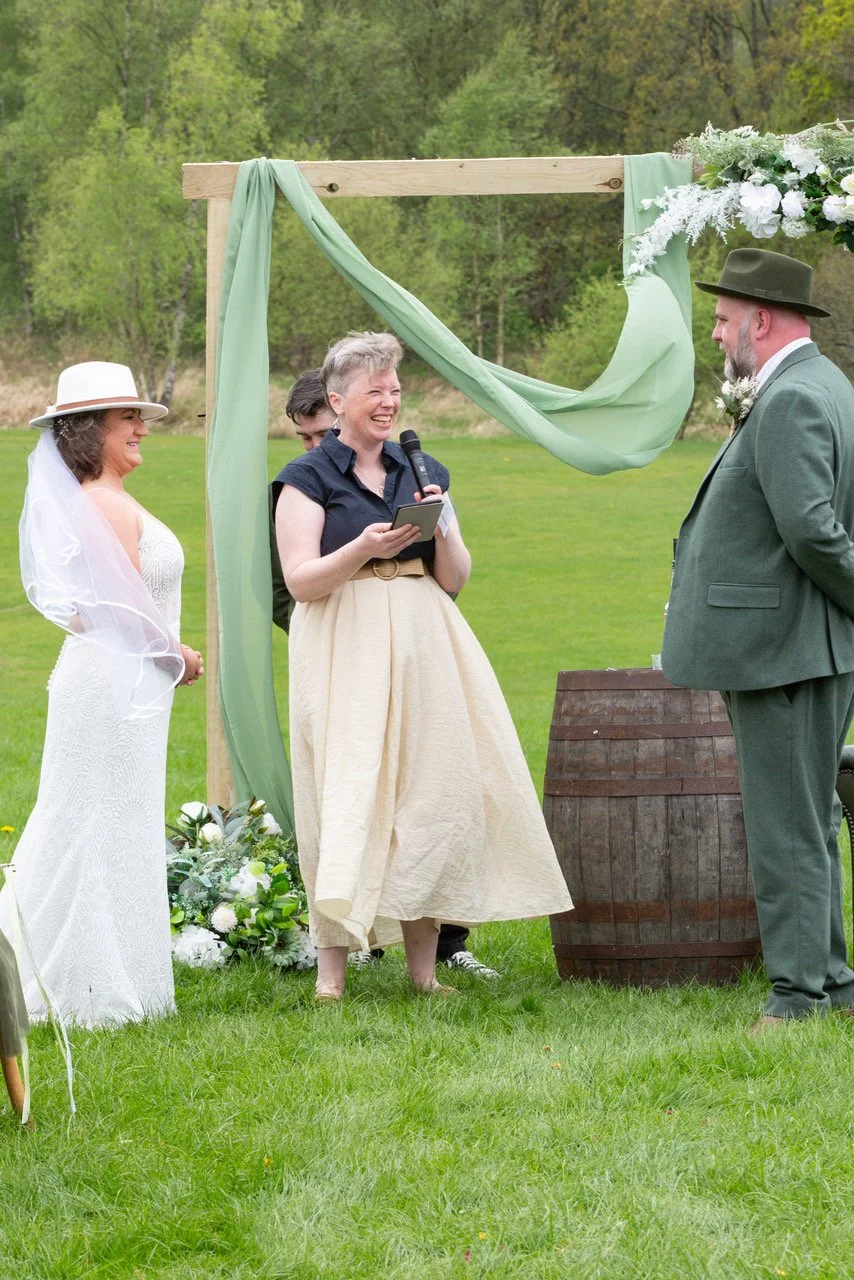
One of the reasons couples choose a celebrant-led wedding ceremony is the freedom it gives them, and I've become increasingly interested in what that freedom actually feels like when you're the person staring at the blank page.
This morning I sent an email to my mailing list about some of the questions I've been sitting with recently. I wrote about my discomfort with some of the architecture we've built around weddings, the expectations we absorb, the performance that can creep in, and all the traditions we can find ourselves following without ever really deciding whether they mean anything to us, or simply because following something feels easier and less exhausting.
One of the questions I asked was:
What happens when freedom leaves you staring into a void? No script, no rules, no structure, now what? WTAF does “your day, your way” mean?
This is where I think the way your celebrant works becomes really important. I don't expect couples to arrive knowing what they want, and having freedom doesn't require you to throw every tradition away and invent something nobody has ever seen before. My job is to help you explore what matters, understand why certain ideas appeal to you, question the parts that don't, and gradually find the shape of a ceremony that makes sense for the two of you.
When you're choosing a celebrant, ask them how they'll help you do that.
If you're currently staring at that blank page, I've also written a practical guide to creating your own wedding ceremony.
4. Notice how they think about your guests
The people sitting in front of you are one of the reasons I find ceremonies so fascinating.
I was talking recently to a couple who had been together for twenty-five years, and eventually our conversation turned to who would be at their wedding. There was a friend coming from Paris, another from Greece, family friends who had been around forever and their parents' friends who had somehow become their friends too.
Suddenly we were looking at this extraordinary web of people who had known different versions of them, witnessed different chapters of their relationship and become woven into their life together.
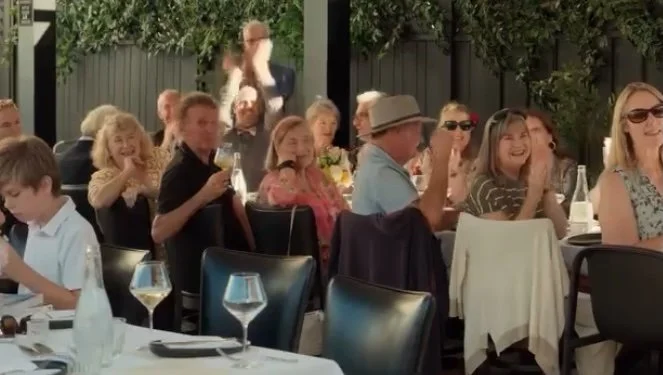
That's something I think about a lot when I'm creating ceremonies. Your guests have come to witness something real, and I want to understand who they are, why they're there and what their presence means to you.
Different celebrants will approach this differently, so if the role your guests play matters to you, ask about it. You might want them actively involved, you might want a few carefully chosen people to contribute, or their involvement might simply come from the way the ceremony acknowledges and speaks to them. There are so many ways to think about it.
5. Notice how you feel when you talk to them
There's a lot of performance around weddings, and ceremony can ask you to move into a very different kind of space where you're talking about love, commitment, family, friendship, grief, hope and whatever else happens to belong to your particular relationship.
Some of that can feel exposing.
Your celebrant may hear stories you haven't told many people. They might need to understand complicated family relationships or why a seemingly tiny moment from eleven years ago still means so much to you. They may also need you to tell them when something they've suggested makes you cringe, when you've changed your mind or when you genuinely have no idea what you want.
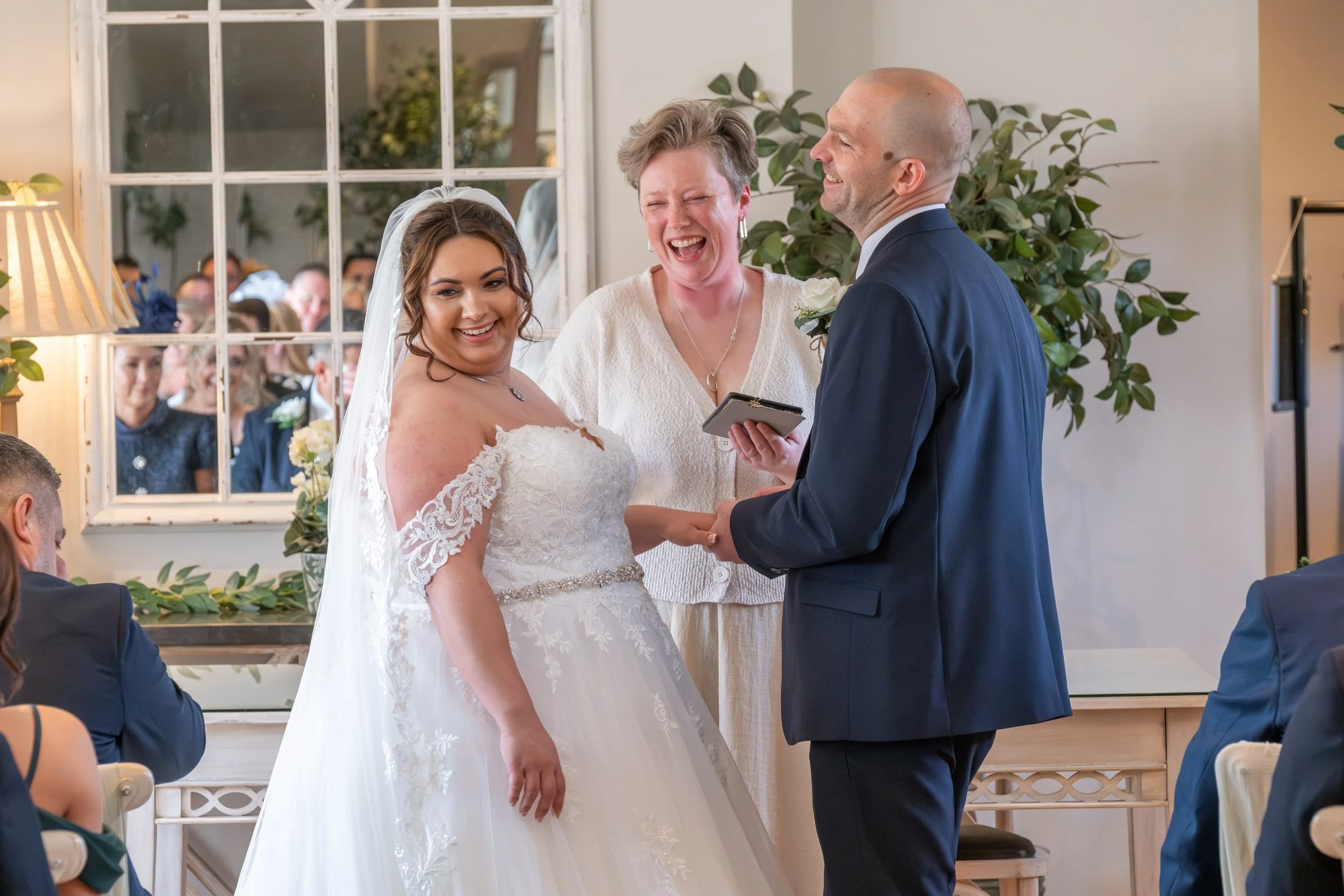
I want the couples I work with to feel comfortable doing all of that with me. I think some of the best work happens once we're relaxed enough to be curious together, and that includes the moments when neither of us has the answer yet. We need to be able to tolerate the discomfort together.
Pay attention to whether you feel you could do that with the person you're considering.
6. Read their reviews with their process in mind
Reviews are incredibly useful when you're working out how to choose a celebrant because previous couples can tell you something a celebrant's own marketing never quite can: what it actually felt like to work with them.
As you read, look at what people choose to talk about. Perhaps couples repeatedly mention feeling relaxed or understood, or they talk about the questions their celebrant asked, the planning experience, the atmosphere in the room, how their families responded or what their guests were still talking about later in the day.
Those details can help you understand where that celebrant's particular strengths lie and whether those are the qualities you're looking for.
7. Have a conversation before you decide
I'd always recommend speaking to a celebrant before you book them, and you don't need to turn that conversation into an interview.
Tell them about your wedding, what you're excited about and what you're unsure about. If the idea of standing in front of everyone makes you want to run away, tell them that too. If you have absolutely no idea what you want from your ceremony yet, that's useful information. You don't need to solve it before the call.
Then pay attention to where the conversation goes and how it makes you feel. Are they curious about you? Do their questions make you think about your ceremony differently? Do you find yourself telling them more than you expected? Perhaps you finish the call feeling more excited about what your ceremony could become.
You're going to spend quite a bit of time with this person, and they'll eventually be standing beside you in a room full of the people you love. Feeling comfortable together matters.
8. Think about what you want your celebrant to help you create
The practical considerations matter, of course. You'll want to understand their fee, availability, experience and exactly what's included in their service.
I'd also leave some room for a bigger question:
What do you want this person to help you create?
I keep coming back to the idea that a wedding ceremony is an opportunity to gather the people you love and pay attention to something that matters. For me, that means understanding the significance of your relationship, the people around it and what you want to recognise, celebrate and share with them.
You may have your own idea of what a ceremony is for, and I hope you do. You might also still be working it out.
You don't need to know exactly what your ceremony will look like when you choose your celebrant. Finding someone who is curious enough to explore that question with you is a pretty good place to start.
So, how do you choose a celebrant for your wedding?
I think choosing a celebrant ultimately comes down to finding someone you trust with the questions as much as the answers.
Someone who is curious about your relationship, your people and what this gathering means to you, and who has a way of working that gives you the space and guidance to discover what belongs in your ceremony.
If you've arrived here wondering how to choose a celebrant, I hope you leave with a slightly bigger question to ask the people you're considering:
What do you think a wedding ceremony is for?
Their answer might tell you an awful lot.
Looking for a celebrant for your wedding?
If the way I've talked about ceremony here has made you think, yes, that's what I want, you can read more about The Ceremony, my full celebrant service.
We'll create your ceremony together, starting with your relationship, the people who matter to you and what you actually want this moment to mean. The process gives us plenty of room to explore ideas, change our minds, follow unexpected threads and create something that feels entirely at home with the two of you.
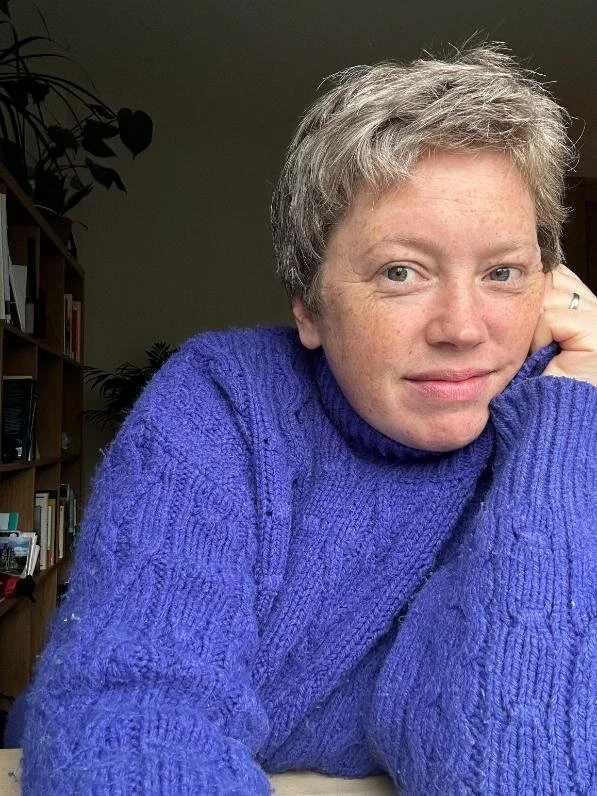
Hello! I’m Sinéad, an independent celebrant based in the UK.
I’m a big believer that your wedding ceremony should the final highlight of an extraordinary journey. A once-in-a-lifetime opportunity to notice, celebrate and share the significance of your relationship with the people you love. I love hearing people’s stories, celebrating love in all its forms and helping couples create a day that feels relaxed, joyful and completely their own.
Come and discover more about my ceremonies here, or pop over and say hello on Instagram here.
Some questions you might have…
-
As soon as you find someone you really want to work with, particularly if you're getting married on a Saturday in the spring or summer. Celebrants can only be in one place at a time, so dates do disappear. I also think there's something lovely about having your celebrant in place early enough that you have plenty of time to think about the ceremony together, without it becoming another decision you're trying to squeeze into the final few weeks. I like to work with my couples over about six months to allow lots of breathing time in the process.
-
Ask about the parts of the process that will affect your experience: how they'll get to know you, how the ceremony is created, how involved you'll be, whether you'll see the script beforehand and what happens if you change your mind.
I'd also ask them what they think makes a brilliant wedding ceremony. It's a wonderfully revealing question, and their answer will probably tell you far more about whether you're a good fit than asking them to describe their “style”.
-
Pay attention to how you feel when you speak to them. You want to feel that they're interested in who you are, that you can tell them when you love or hate an idea, and that their questions make you curious about what your ceremony could become.
You are trusting this person with a surprisingly intimate part of your wedding, so feeling comfortable enough to be yourselves around them matters enormously.
-
Celebrant fees vary depending on experience, location, what's included and the amount of work involved in creating your ceremony, so make sure you understand exactly what you're paying for when you compare prices, and make sure you are realistic about your budget.
Look at the whole process as well as the ceremony on the day. How much time will you spend together? Is the ceremony written from scratch? How collaborative is the process? Is there a rehearsal or final check-in? Understanding what the service actually includes makes the price much more meaningful.
-
In England, a celebrant-led wedding ceremony is generally separate from the legal marriage process, so couples usually complete the legal requirements separately through a register office.
That separation also gives us enormous freedom when creating the ceremony itself, which is one of the reasons I love this work so much.
Wedding ceremony services for couples
I offer two ways to work with me, depending on whether you would like me to create and lead your ceremony or help you create it yourselves.