How to Create Your DIY Wedding Ceremony
I might be shooting myself in the foot here, but honestly?.. I love a DIY wedding ceremony. With the right preparation, it can give you the freedom to celebrate your relationship in a way that feels completely personal. My advice is to begin with a simple structure, choose stories and readings that genuinely mean something to you, write promises that sound like you, and involve trusted friends or family members. A good rehearsal then helps everyone feel relaxed and confident on the day.
If a traditional ceremony doesn’t feel quite right, or you simply love the idea of making every part of your wedding your own, a DIY wedding ceremony could be perfect for you.
Writing a ceremony may initially feel like a daunting task. What needs to be included? Who should speak? How long should it last? And how do you make it meaningful without making it overly formal or sentimental?
And I have some good news - there are no strict rules about how a personal ceremony should feel. It can be warm, funny, romantic, relaxed or a joyful mixture of all four. In this guide, I’ll walk you through how I suggest creating a DIY wedding ceremony that feels natural, memorable and unmistakably yours.
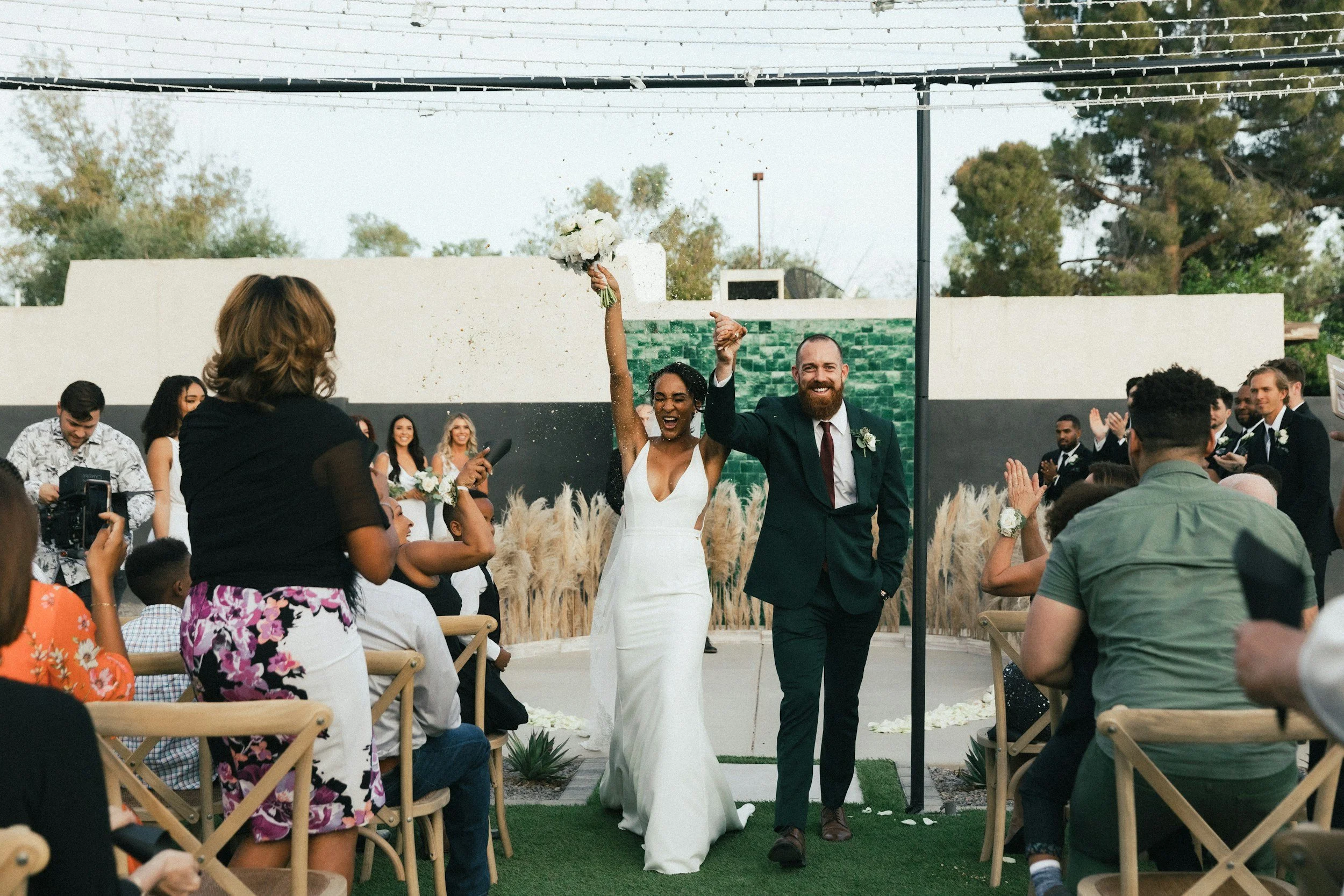
Couple celebrating at the end of their outdoor wedding ceremony, with guests throwing confetti and cheering
1. Check how to get legally married in your jurisdiction.
Before planning your DIY wedding ceremony, check what you need to do to become legally married in your own jurisdiction. The requirements vary depending on where you live and where your wedding will take place. Contact the relevant local authority or official body for clear, up-to-date information about the process you need to follow. Once you understand and have arranged the legal side, you can focus on the part I find most exciting: creating a personal DIY wedding ceremony that reflects your relationship and feels completely right for you.
2. Decide how you want the ceremony to feel
Before choosing readings or writing vows, think about the overall atmosphere you want to create. Would you like your ceremony to feel:
Warm and romantic?
Relaxed and conversational?
Funny and light-hearted?
Traditional with a personal twist?
Short and simple?
Emotional and reflective?
Inclusive and family-focused?
Pick two or three words to describe how you want the ceremony to feel. It is a wonderfully simple exercise, and those words can guide every decision you make, from the music and readings to the person you ask to lead it. For example, if you choose “relaxed, joyful and personal”, you probably don’t need formal language or lengthy traditional passages. A conversational welcome, a funny story and heartfelt vows may suit you much better.
3. Choose someone to lead your DIY wedding ceremony
Your ceremony needs somebody to welcome your guests, introduce each section and keep everything moving smoothly. You could ask:
A close friend
A sibling
A parent
Two people to lead different sections
Several loved ones to share the role
The best person may not necessarily the most polished public speaker. Choose someone who understands you, can hold the room with warmth and is willing to practise. Genuine affection will matter far more than perfect presentation.
Talk to them before you start writing. Explain why you would like them to be involved, what the role includes and how much preparation will be required. Give them plenty of time to decide without feeling pressured.
If you’re asking a loved one to lead your ceremony, remember that they are also one of your guests. A clear script and a proper rehearsal will help them enjoy the occasion instead of worrying about what comes next.
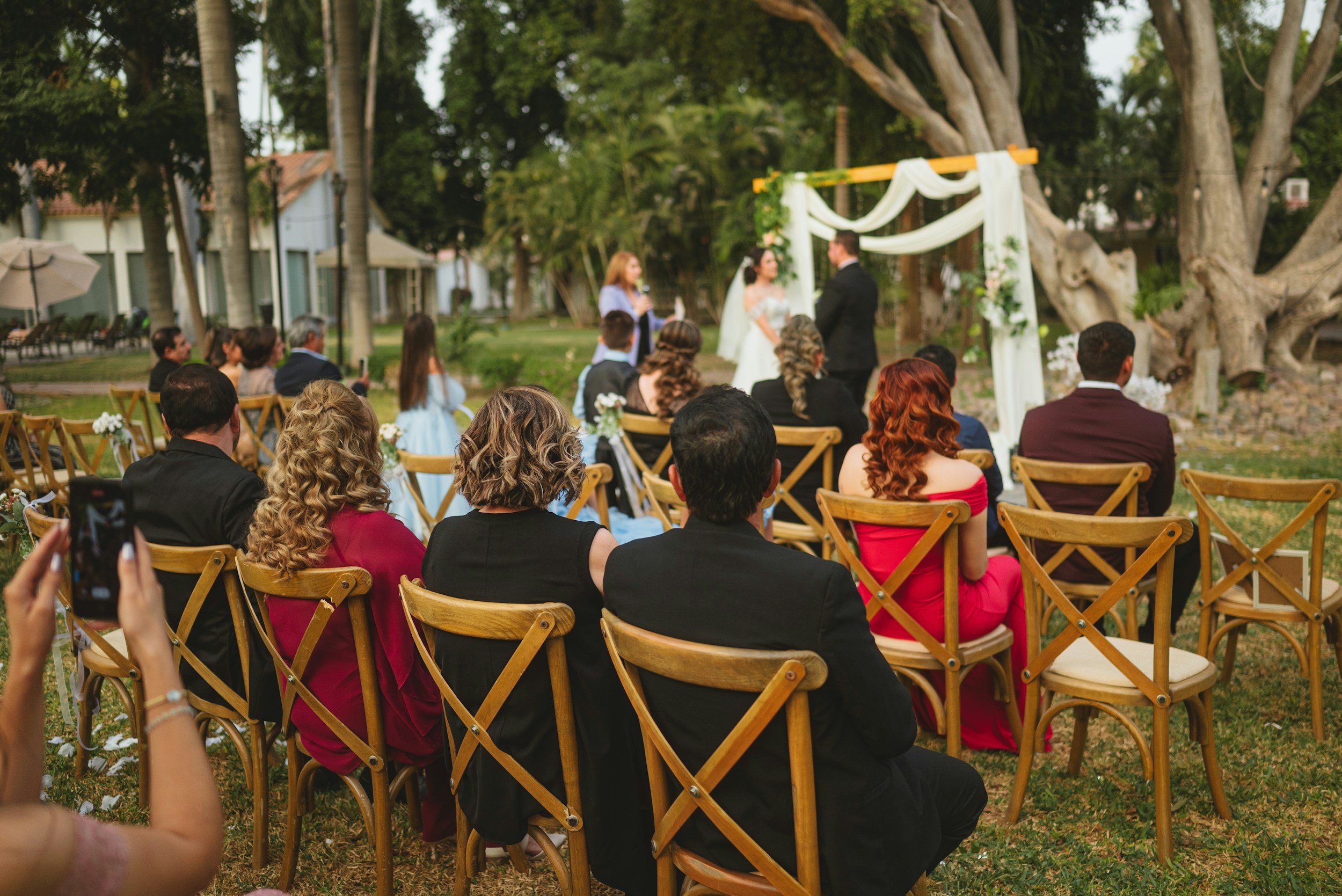
Friend leads an outdoor DIY wedding ceremony as guests watch and take pictures.
4. Create the structure of your ceremony
Once you know who will lead it, create a simple ceremony outline. A DIY wedding ceremony could include:
The entrance
A welcome and introduction
Your story
A reading, poem or song
Words about love or marriage
Contributions from family or friends
Your promises or vows
The exchange of rings
A symbolic ritual
A closing announcement
Your exit
I don’t believe you need to include an element simply because it usually appears in a wedding ceremony. The best structure is the one that feels natural to you and gives every chosen moment a reason to be there.
Most ceremonies last between 20 and 40 minutes, although yours can be shorter or longer. Read the complete script aloud and time it rather than relying on the number of pages. People often speak more slowly during an emotional occasion.
5. Write a warm welcome
The welcome helps everyone settle into the moment and sets the tone for the ceremony. Your ceremony leader can:
Welcome your guests
Thank everyone for being there
Acknowledge people who have travelled
Mention loved ones who cannot be present
Explain that you have created the ceremony yourselves
Ask guests to put their phones away, if appropriate
Introduce the next part of the ceremony
I think a welcome works best when it is warm, clear and conversational. It doesn’t need to be overly formal; it should sound like something your chosen speaker would genuinely say.
For example:
“Welcome, everyone. It means so much to Alex and Sam to see all their favourite people gathered here today. They’ve created this ceremony to celebrate their relationship in a way that feels personal, relaxed and full of joy, and they’re delighted that you’re here to share it with them.”
Use this as inspiration rather than something you have to copy exactly.
6. Tell your story
For me, your relationship story is the heart of a DIY wedding ceremony and one of the simplest ways to make it feel truly personal. You might include:
How you met
Your first impressions of each other
A memorable early date
The moment the relationship became serious
Adventures or challenges you have shared
The things you love and admire about one another
The proposal
What you are looking forward to in married life
I rarely think a complete chronological history is the most interesting approach. Instead, I would choose a handful of moments that reveal something meaningful about you as a couple and allow your guests to recognise the relationship they know and love.
In fact, I’m currently designing a ceremony in which the storytelling is being done collectively. Rather than having one person recount the couple’s story from beginning to end, different friends and family members will share anecdotes from different stages of their lives.
Each contribution offers another perspective on who they are, both individually and together. One person might share a story from childhood, another might remember the early days of their relationship, and somebody else might talk about the way they have supported one another through an important chapter of their lives.
Together, these stories create a fuller picture of the couple and demonstrate the significance of their relationship through the eyes of the people who know them best. I love this approach because it turns the ceremony into a genuinely shared experience. The guests aren’t simply listening to the couple’s story; they are helping to tell it.
If you would like to try something similar, choose contributors who know you from different parts of your lives. Give each person a clear theme or moment to speak about so that the stories complement one another rather than becoming repetitive.
Ask them to keep their contribution fairly short and to focus on one meaningful anecdote. The story doesn’t need to be dramatic. Often, a small moment that shows kindness, loyalty, humour or quiet support says far more about a relationship than a list of dates and milestones.
Include moments your guests will recognise, but avoid private jokes that most people won’t understand. Your story can be moving without becoming overly serious, and funny without turning into an embarrassing roast.
If you prefer to write the story yourselves, try answering the same questions separately and then comparing your responses. The differences are often just as charming and revealing as the similarities.
7. Choose readings and contributions that mean something
Readings can add another voice or perspective to your ceremony, but you don’t have to include one simply because it is traditional. You could choose:
A favourite poem
A passage from a novel
Song lyrics
An extract from a film
A letter
A piece written by a friend or family member
A short reflection on love or marriage
A contribution from a child
A live musical performance
I’m a firm believer that a reading should earn its place in the ceremony. Choose something that reflects your personalities or says something you genuinely believe. A simple, sincere reading will usually feel more powerful than a complicated piece chosen only because it sounds suitably “wedding-like”.
Tell each reader exactly when they will speak and where they should stand. Print their words in a clear, easy-to-read font and give them a spare copy on the day.
8. Write your wedding vows
Your vows are the promises you make to one another. They can be romantic, practical, funny or deeply emotional. Begin by considering:
What do you love most about your partner?
How has your life changed because of them?
What do you admire about them?
What are you grateful for?
What do you want to promise them?
What kind of marriage do you want to create?
What are you looking forward to sharing?
I love vows that combine the profound with the wonderfully ordinary. Try mixing meaningful promises with practical or playful ones: “I promise to support your dreams” can sit happily alongside “I promise not to watch the next episode without you. Again. That will never happen again”
Decide whether you will write your vows together, separately or use the same structure while keeping the wording secret.
If you write them separately, agree on an approximate length and tone. This avoids one person arriving with three funny sentences while the other unveils an emotional five-page speech.
Read your vows aloud several times. Written language and spoken language feel different, so simplify any sentences that are difficult to say naturally.
If you’d like support in writing your vows, I designed a short course to get your vows written!
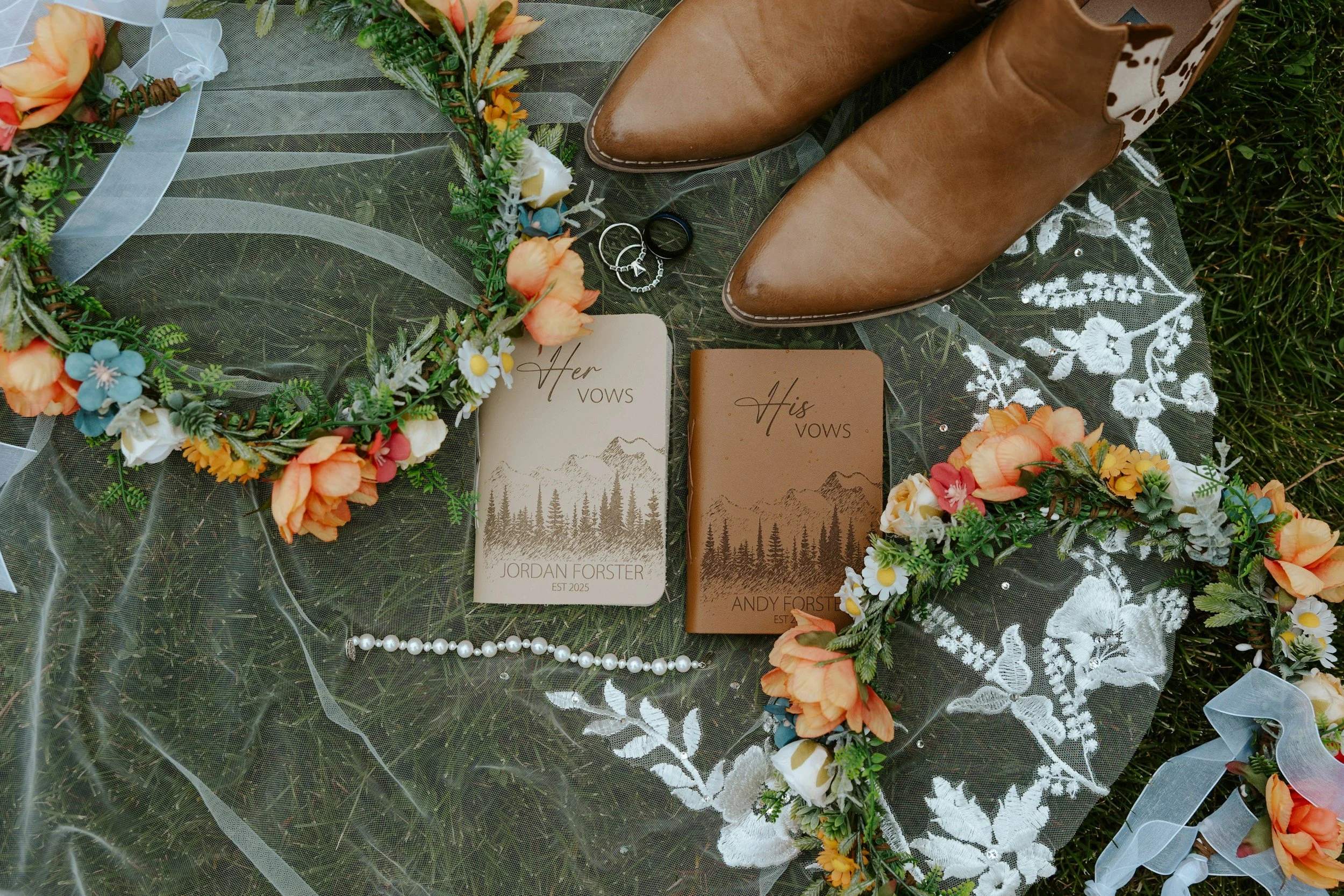
DIY wedding ceremony flat lay with personalised his and her vows books, floral crown, and wedding rings on grass
9. Decide how to exchange your rings
I think the ring exchange is often most powerful when it is kept simple. It can be as brief or elaborate as you like, but the words should feel comfortable enough to say while you are living the moment.
Your ceremony leader might briefly explain what the rings represent before inviting you to exchange them. You can repeat a short phrase as you place the ring on your partner’s finger, such as:
“I give you this ring as a symbol of my love and the promises I have made today.”
You can use the same words or write a different line for each person.
Decide in advance who will look after the rings. Make sure that person knows when and how to hand them over. If a child or pet is acting as the ring bearer, it may be wise to give the real rings to a responsible adult and use symbolic ones for the entrance.
10. Add a symbolic element if it feels right
A symbolic ritual can involve your guests and create a memorable visual moment. Ideas include:
Handfasting
Lighting candles
Mixing cocktails
Planting a tree
Creating a time capsule
Exchanging letters
Ring-warming
Sharing food or drink
Involving children in a family promise
My suggestion would be to choose one because it has genuine meaning for you, not because you feel the ceremony needs filling. One thoughtful ritual will always have more impact than several added for appearance.
Think practically, too. Candles may be difficult outdoors, loose paper can blow away, and complicated props need somebody to arrange and remove them. Rehearse the ritual so everyone knows what to do.
11. Write a strong ending
I like the ending of a ceremony to feel clear, confident and joyful. Your guests should know exactly when the ceremony has reached its celebratory conclusion. Your ceremony leader can:
Offer a final thought or wish for your marriage
Thank your guests
Invite you to kiss
Introduce you using your chosen names
Explain what will happen next
Invite guests to stand, cheer or throw confetti
Choose your exit music and arrange for it to begin at the right moment. A confident ending will help everyone understand that it is time to celebrate.
12. Prepare a complete ceremony script
Once you have written each part, I’d suggest combining everything into one master script. This is the unglamorous step that makes an enormous difference on the day.
Include:
Music cues
Entrance instructions
The names of every speaker
The complete wording for each section
Movement and positioning instructions
Ring and prop cues
Your vows
The final announcement
Exit instructions
Print separate versions for everyone involved. Highlight each person’s section and make the text large enough to read comfortably.
Keep at least two spare copies. Ask someone reliable to bring the master copy to the venue rather than trusting one person’s phone or internet connection.
13. Rehearse the ceremony
It's never a bad idea to rehearse a DIY wedding ceremony. It doesn’t need to become a flawless performance but everyone should understand the order of events and feel comfortable with their role. Practise:
The entrance and where everyone will stand
How and when speakers will move
Microphone/speaker use
Play any music and check the timings
Handing over the rings
Any symbolic rituals
Your vows
The ending and exit
Time the full ceremony during the rehearsal. Check that the transitions feel natural and remove anything that feels repetitive. Remind everyone to speak slowly, pause occasionally and look up from the script. Nerves tend to make people rush.
14. Make a practical plan for the day
Decide who will be responsible for:
Bringing the scripts
Looking after the rings
Setting up chairs or decorations
Testing the sound system
Cueing the music
Organising readers
Arranging ceremony props
Checking the weather
Moving the ceremony indoors if necessary
If your ceremony is outside, think about a proper inclement-weather alternative plan. Hoping for the best is lovely; quietly planning for everything else is even better.
Your chosen ceremony leader shouldn’t have to manage every logistical detail. Give practical jobs to other trusted people so they can focus on delivering the ceremony.
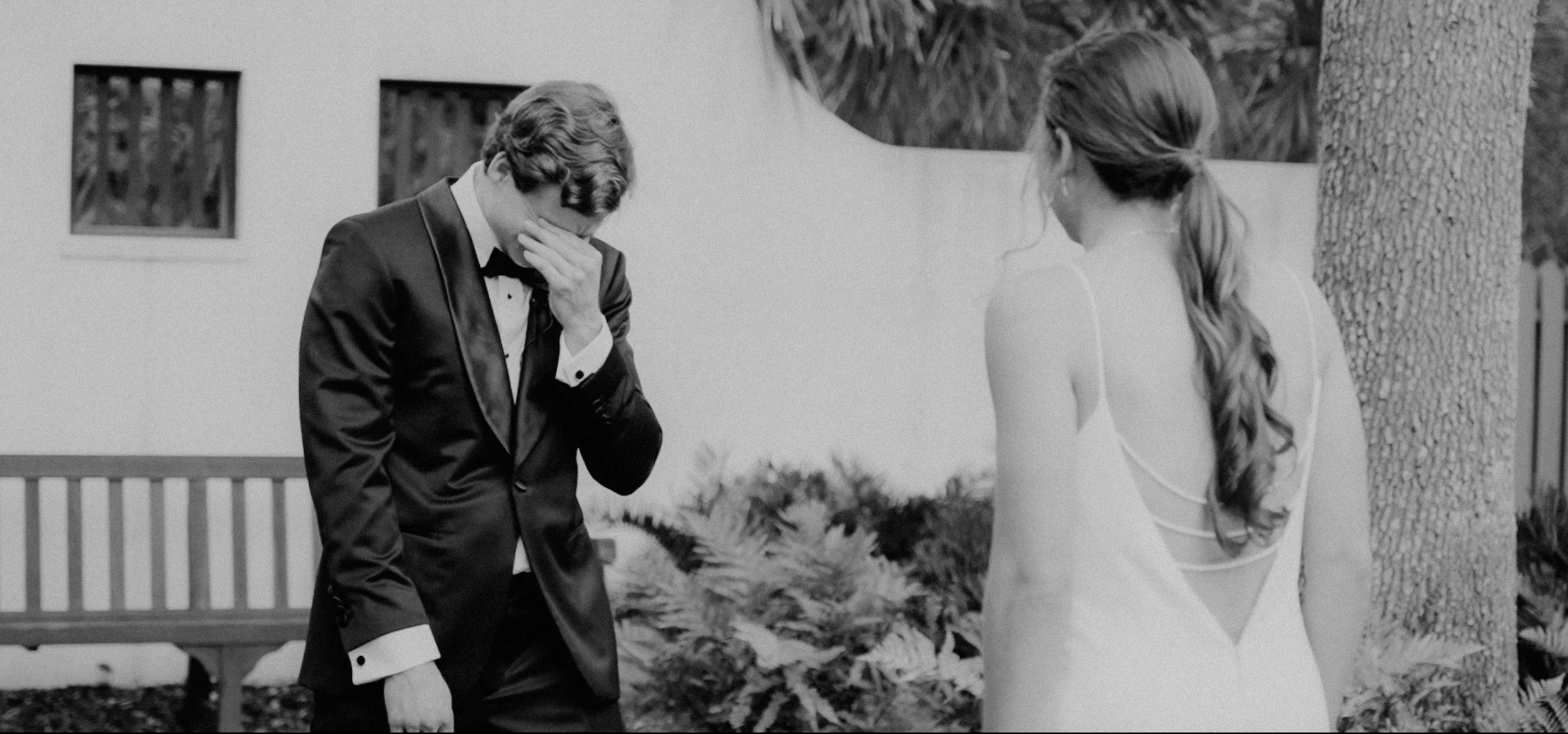
Emotional groom in tears during wedding ceremony with bride.
15. Let it feel human
Above all, I want you to know that your ceremony does not need to be performed perfectly to be wonderful. There will be big emotions. Someone will stumble over a sentence. A child might wander into the wrong place. You might laugh halfway through your vows. Those unscripted moments are often the ones you all remember most fondly. If it feels sincere, welcoming and unmistakably true to the two of you, you’ve done your job with bells on!
Creating a DIY wedding ceremony that feels like you
My approach to creating a DIY wedding ceremony is to begin with the feeling you want to create, build a simple structure and fill it with stories, readings and promises that genuinely matter to you. Choose someone warm and confident to lead it, prepare a clear script and rehearse everything before the day.
Creating the ceremony yourselves can be incredibly meaningful, but you don’t have to work everything out alone. If you love the idea of creating your own ceremony but would like some expert guidance, I can help you shape your ideas into a ceremony that feels personal, natural and completely yours. Find out more about my DIY ceremony support, or book a call to talk through your plans.
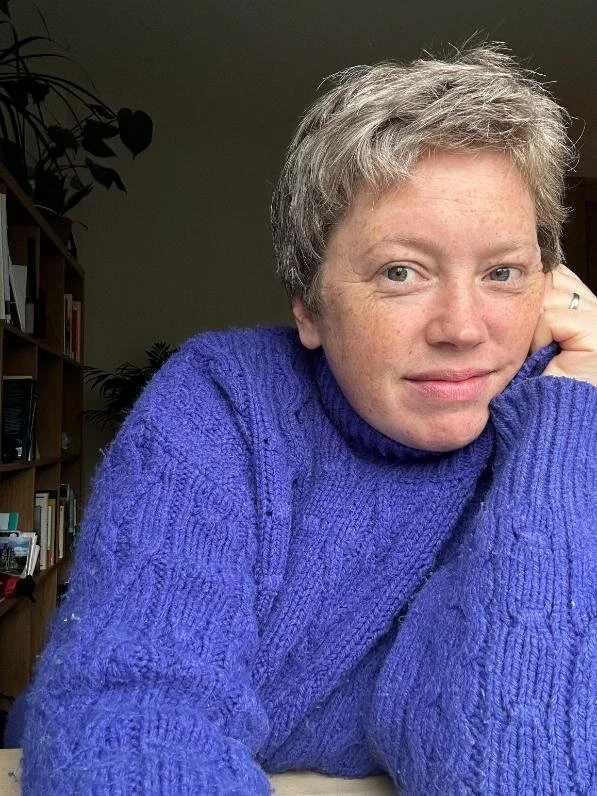
Hello! I’m Sinéad, an independent celebrant based in the UK.
I’m a big believer that your wedding ceremony should the final highlight of an extraordinary journey. A once-in-a-lifetime opportunity to notice, celebrate and share the significance of your relationship with the people you love. I love hearing people’s stories, celebrating love in all its forms and helping couples create a day that feels relaxed, joyful and completely their own.
Come and discover more about my ceremonies here, or pop over and say hello on Instagram here.
Some questions you might have…
-
You can create a personal DIY wedding ceremony and ask someone special to lead it. However, the process for becoming legally married varies between jurisdictions. Check with the relevant authority where you are getting married to understand and arrange the legal requirements that apply to you.
-
I usually find that approximately 20 to 40 minutes gives a ceremony enough space to feel meaningful without losing its energy. There is no perfect length, so focus on including the elements that matter and remove repetition. Read the complete script aloud and time it during your rehearsal.
-
I would choose somebody you trust who feels comfortable speaking in front of your guests and understands the atmosphere you want to create. Willingness to prepare matters more to me than professional-level speaking skills. You can also divide the role between two or more people.
-
Your ceremony could include a welcome, your relationship story, readings, vows, a ring exchange, a symbolic ritual and a closing announcement. None of these elements is compulsory, so choose the ones that feel meaningful to you.
-
No. Reading your vows is completely acceptable and removes the pressure to remember every word during an emotional moment. Print them clearly on cards or in small vow books and keep a spare copy with someone you trust.
Wedding ceremony services for couples
I offer two ways to work with me, depending on whether you would like me to create and lead your ceremony or help you create it yourselves.